
Walter’s Moral Exposure
The Canterbury TalesThis flow traces Walter’s movement from admired ruler to public scandal and shows how his apparent restoration remains ethically compromised.
increasing Bearing strength in each event
 decreasing
Bearing strength in each eventdecreasingPopular Marquis
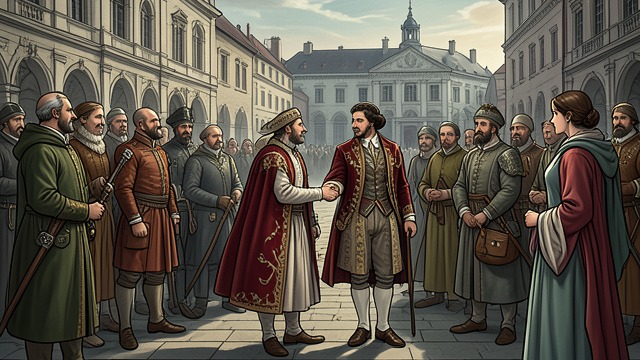
Popular Marquis
Power Without Heir
Walter enjoys hunting and freedom while refusing marriage. His people fear that his death will leave them subject to an unknown successor.
Conditional Responsibility
He agrees to marry only after the people promise to honor his choice. The arrangement makes his later cruelty a betrayal of communal trust.
Idealizing Observer
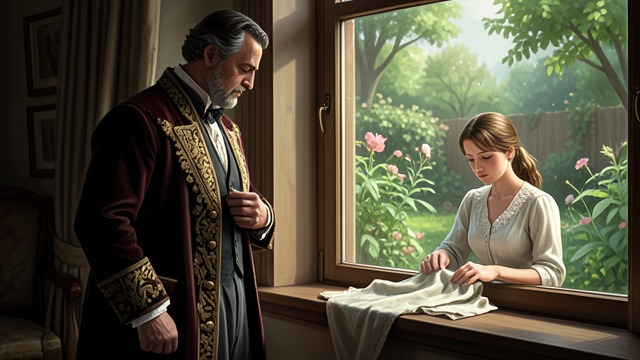
Idealizing Observer
Recognition of Virtue
Walter watches Griselda work and respects her discipline. He sees in poverty a moral excellence unavailable through lineage alone.
Dangerous Experiment
His admiration becomes a desire to test her absolutely. He treats a human marriage as a laboratory for certainty.
Secret Persecutor
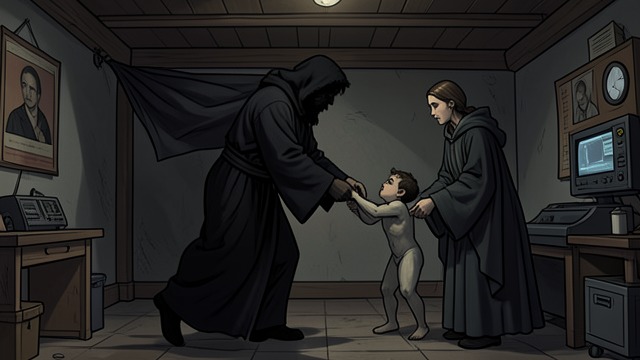
Secret Persecutor
Manufactured Necessity
Walter attributes each act of cruelty to the complaints of his subjects. This lets him disguise personal obsession as political duty.
Escalation
He removes both children, spreads the appearance of murder, and watches Griselda for signs of revolt. His tests become progressively less defensible.
Publicly Hated Ruler
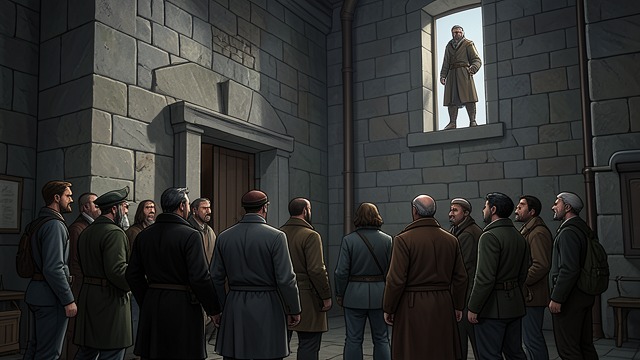
Publicly Hated Ruler
Social Judgment
The people begin to hate Walter because they believe he murdered his children. Their changing opinion exposes the instability of popularity.
Inner Satisfaction
Walter nevertheless continues the experiment, treating public hatred as secondary to private proof. His authority becomes isolated from the community it once represented.
Restorer of the Household
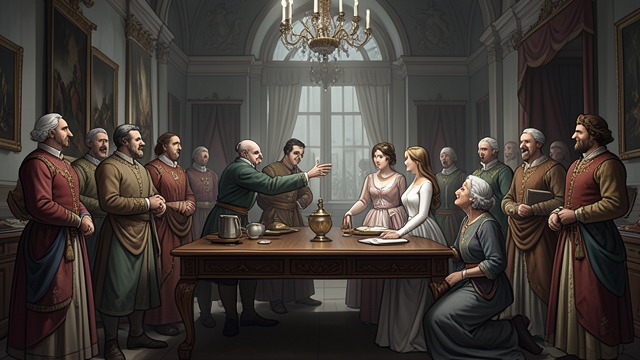
Restorer of the Household
Confession of Design
Walter reveals that the children survived and that the new bride is his daughter. He presents restoration as the reward for Griselda’s obedience.
Irreparable Knowledge
The household celebrates, but Walter’s confession also confirms deliberate psychological violence. His public role is restored more fully than his moral credibility.
Before Walter’s marriage
Before the wedding day
After Griselda’s first childbirth
After the rumors of child murder spread
At the final feast
